
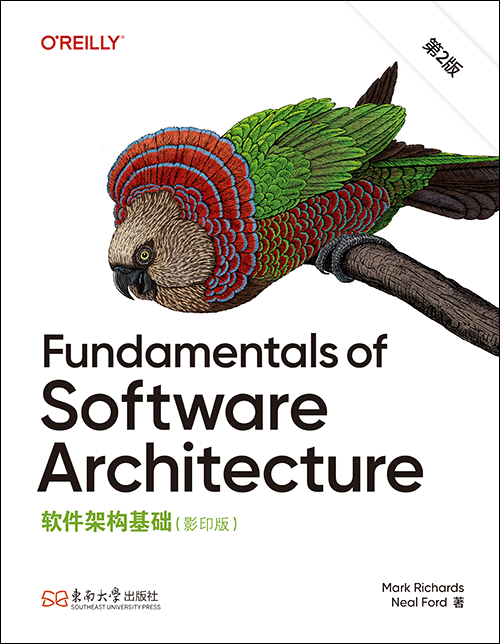
软件架构基础 第2版(影印版)
出版时间:2025年07月
页数:520
“这是一本从当代理念出发,探索现代软件架构的不可或缺的参考书。无论你是偶然走上架构师岗位的新手,还是希望精进技艺的资深人士,本书都能为你提供必备的工具与知识,助你在专业领域脱颖而出。”
——Raju Gandhi
Head First Git作者,Head First Software Architecture合著者
想要在职业生涯中更进一步,摆脱单纯编码的开发者都渴望成为软件架构师,然而多年来一直缺少一本真正指导开发者走向架构师的书,这一空白如今得以填补。本书的全新修订版涵盖了软件架构的诸多方面,新增多个章节,囊括该领域最新的实践与见解。无论是现任架构师还是有志成为架构师的读者,都将从中学习到架构特性、架构模式、组件划分、架构图绘制、治理机制、数据管理、生成式AI、团队拓扑结构等众多主题。
两位拥有多年专业教学经验的实践者Mark Richards和Neal Ford,在书中重点强调适用于各种技术栈的通用架构原则。你将从当代视角重新审视软件架构,全面思考过去十年来的技术创新与发展。
本书探讨了:
● 架构风格与模式:微服务、模块化单体架构、微内核、分层架构等
● 组件:识别、耦合、内聚、划分、粒度
● 软技能:高效团队管理、协作、业务参与模型、谈判、演示等
● 现代工程实践:过去几年中发生重大变革的方法与运营策略,包括云计算考量及生成式AI
● 架构作为一门工程学科:可重复的结果、指标以及为软件架构增添严谨性的具体评估方法
——Raju Gandhi
Head First Git作者,Head First Software Architecture合著者
想要在职业生涯中更进一步,摆脱单纯编码的开发者都渴望成为软件架构师,然而多年来一直缺少一本真正指导开发者走向架构师的书,这一空白如今得以填补。本书的全新修订版涵盖了软件架构的诸多方面,新增多个章节,囊括该领域最新的实践与见解。无论是现任架构师还是有志成为架构师的读者,都将从中学习到架构特性、架构模式、组件划分、架构图绘制、治理机制、数据管理、生成式AI、团队拓扑结构等众多主题。
两位拥有多年专业教学经验的实践者Mark Richards和Neal Ford,在书中重点强调适用于各种技术栈的通用架构原则。你将从当代视角重新审视软件架构,全面思考过去十年来的技术创新与发展。
本书探讨了:
● 架构风格与模式:微服务、模块化单体架构、微内核、分层架构等
● 组件:识别、耦合、内聚、划分、粒度
● 软技能:高效团队管理、协作、业务参与模型、谈判、演示等
● 现代工程实践:过去几年中发生重大变革的方法与运营策略,包括云计算考量及生成式AI
● 架构作为一门工程学科:可重复的结果、指标以及为软件架构增添严谨性的具体评估方法
- Preface
- 1. Introduction
- Defining Software Architecture
- Laws of Software Architecture
- Expectations of an Architect
- Roadmap
- Part I. Foundations
- 2. Architectural Thinking
- Architecture Versus Design
- Technical Breadth
- Analyzing Trade-Offs
- Understanding Business Drivers
- Balancing Architecture and Hands-On Coding
- There’s More to Architectural Thinking
- 3. Modularity
- Modularity Versus Granularity
- Defining Modularity
- Measuring Modularity
- From Modules to Components
- 4. Architectural Characteristics Defined
- Architectural Characteristics and System Design
- Architectural Characteristics (Partially) Listed
- Trade-Offs and Least Worst Architecture
- 5. Identifying Architectural Characteristics
- Extracting Architectural Characteristics from Domain Concerns
- Composite Architectural Characteristics
- Extracting Architectural Characteristics
- Kata: Silicon Sandwiches
- Limiting and Prioritizing Architectural Characteristics
- 6. Measuring and Governing Architecture Characteristics
- Measuring Architecture Characteristics
- Governance and Fitness Functions
- 7. The Scope of Architectural Characteristics
- Architectural Quanta and Granularity
- Synchronous Communication
- The Impact of Scoping
- Scoping and the Cloud
- 8. Component-Based Thinking
- Defining Logical Components
- Logical Versus Physical Architecture
- Creating a Logical Architecture
- Component Coupling
- Case Study: Going, Going, Gone—Discovering Components
- Part II. Architecture Styles
- 9. Foundations
- Styles Versus Patterns
- Fundamental Patterns
- Architecture Partitioning
- Monolithic Versus Distributed Architectures
- Team Topologies and Architecture
- On to Specific Styles
- 10. Layered Architecture Style
- Topology
- Style Specifics
- Data Topologies
- Cloud Considerations
- Common Risks
- Governance
- Team Topology Considerations
- Style Characteristics
- Examples and Use Cases
- 11. The Modular Monolith Architecture Style
- Topology
- Style Specifics
- Data Topologies
- Cloud Considerations
- Common Risks
- Governance
- Team Topology Considerations
- Style Characteristics
- Examples and Use Cases
- 12. Pipeline Architecture Style
- Topology
- Style Specifics
- Data Topologies
- Cloud Considerations
- Common Risks
- Governance
- Team Topology Considerations
- Style Characteristics
- Examples and Use Cases
- 13. Microkernel Architecture Style
- Topology
- Style Specifics
- Data Topologies
- Cloud Considerations
- Common Risks
- Governance
- Team Topology Considerations
- Architecture Characteristics Ratings
- Examples and Use Cases
- 14. Service-Based Architecture Style
- Topology
- Style Specifics
- Data Topologies
- Cloud Considerations
- Common Risks
- Governance
- Team Topology Considerations
- Style Characteristics
- Examples and Use Cases
- 15. Event-Driven Architecture Style
- Topology
- Style Specifics
- Data Topologies
- Cloud Considerations
- Common Risks
- Governance
- Team Topology Considerations
- Style Characteristics
- Examples and Use Cases
- 16. Space-Based Architecture Style
- Topology
- Style Specifics
- Data Topologies
- Cloud Considerations
- Common Risks
- Governance
- Team Topology Considerations
- Style Characteristics
- Examples and Use Cases
- 17. Orchestration-Driven Service-Oriented Architecture
- Topology
- Style Specifics
- Data Topologies
- Cloud Considerations
- Common Risks
- Governance
- Team Topology Considerations
- Style Characteristics
- Examples and Use Cases
- 18. Microservices Architecture
- Topology
- Style Specifics
- Data Topologies
- Cloud Considerations
- Common Risks
- Governance
- Team Topology Considerations
- Style Characteristics
- Examples and Use Cases
- 19. Choosing the Appropriate Architecture Style
- Shifting “Fashion” in Architecture
- Decision Criteria
- Monolith Case Study: Silicon Sandwiches
- Distributed Case Study: Going, Going, Gone
- 20. Architectural Patterns
- Reuse
- Communication
- CQRS
- Infrastructure
- Part III. Techniques and Soft Skills
- 21. Architectural Decisions
- Architectural Decision Antipatterns
- Architectural Significance 390
- Architectural Decision Records
- 22. Analyzing Architecture Risk
- Risk Matrix
- Risk Assessments
- Risk Storming
- User-Story Risk Analysis
- Risk-Storming Use Case
- Summary
- 23. Diagramming Architecture
- Diagramming
- Summary
- 24. Making Teams Effective
- Collaboration
- Constraints and Boundaries
- Architect Personalities
- How Much Involvement?
- Team Warning Signs
- Leveraging Checklists
- Providing Guidance
- Summary
- 25. Negotiation and Leadership Skills
- Negotiation and Facilitation
- The Software Architect as a Leader
- Integrating with the Development Team
- Summary
- 26. Architectural Intersections
- Architecture and Implementation
- Architecture and Infrastructure
- Architecture and Data Topologies
- Architecture and Engineering Practices
- Architecture and Team Topologies
- Architecture and Systems Integration
- Architecture and the Enterprise
- Architecture and the Business Environment
- Architecture and Generative AI
- Summary
- 27. The Laws of Software Architecture, Revisited
- First Law: Everything in Software Architecture Is a Trade-Off
- Second Law: Why Is More Important Than How
- The Spectrum Between Extremes
- Parting Words of Advice
- Appendix. Discussion Questions
- Index
书名:软件架构基础 第2版(影印版)
作者:Mark Richards, Neal Ford 著
国内出版社:东南大学出版社
出版时间:2025年07月
页数:520
书号:978-7-5766-2002-3
原版书书名:Fundamentals of Software Architecture, 2nd Edition
原版书出版商:O'Reilly Media
The animal on the cover of Fundamentals of Software Engineering is the red-fan parrot (Deroptyus accipitrinus), a native of South America, where it is known by several names such as loro cacique in Spanish, or anaca, papagaio-de-coleira, and vanaquia in Portuguese. This New World bird makes its home up in the canopies and tree holes of the Amazon rainforest, where it feeds on the fruits of the Cecropia tree, aptly known as “snake fingers,” as well as the hard fruits of various palm trees.
As the only member of the genus Deroptyus, the red-fan parrot is distinguished by the deep red feathers that cover its nape. Its name comes from the fact that those feathers will “fan” out when it feels excited or threatened and reveal the brilliant blue that highlights each tip. The head is topped by a white crown and yellow eyes, with brown cheeks that are streaked in white. The parrot’s breast and belly are covered in the same red feathers dipped in blue, in contrast with the layered bright green feathers on its back.
Between December and January, the red-fan parrot will find its lifelong mate and then begin laying two to four eggs a year. During the 28 days in which the female is incubating the eggs, the male will provide her with care and support. After about 10 weeks, the young are ready to start fledging in the wild and begin their 40-year life span in the world’s largest tropical rainforest.
While the red-fan parrot’s current conservation status is designated as of Least Concern, many of the animals on O’Reilly covers are endangered; all of them are important to the world.
As the only member of the genus Deroptyus, the red-fan parrot is distinguished by the deep red feathers that cover its nape. Its name comes from the fact that those feathers will “fan” out when it feels excited or threatened and reveal the brilliant blue that highlights each tip. The head is topped by a white crown and yellow eyes, with brown cheeks that are streaked in white. The parrot’s breast and belly are covered in the same red feathers dipped in blue, in contrast with the layered bright green feathers on its back.
Between December and January, the red-fan parrot will find its lifelong mate and then begin laying two to four eggs a year. During the 28 days in which the female is incubating the eggs, the male will provide her with care and support. After about 10 weeks, the young are ready to start fledging in the wild and begin their 40-year life span in the world’s largest tropical rainforest.
While the red-fan parrot’s current conservation status is designated as of Least Concern, many of the animals on O’Reilly covers are endangered; all of them are important to the world.
购买选项
|
© 2026,奥莱利技术咨询(北京)有限公司。版权所有。 传真: +86-10-88097463 京ICP备05003502号 |
|