
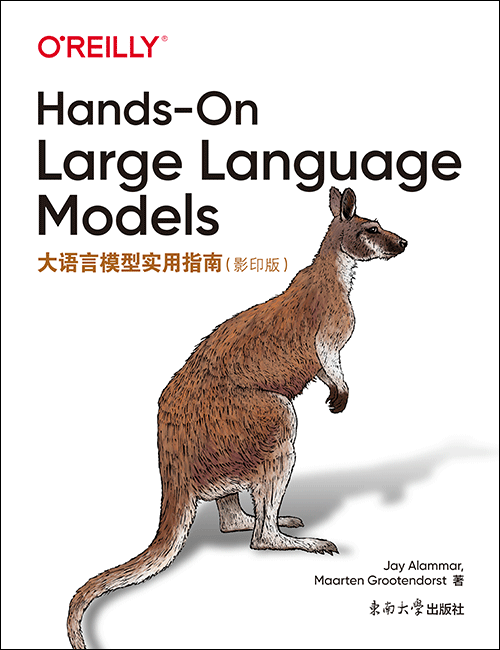
大语言模型实用指南(影印版)
出版时间:2025年02月
页数:403
“Jay和Maarten延续了两人的传统,为复杂的主题提供精美的插图和深刻的描述。对于任何想要了解大型语言模型主要构建技术的人而言,本书都是不容错过的宝贵资源。”
——Andrew Ng
DeepLearning.AI创始人
“我想不到还有哪本书能比眼前的这本更重要。本书字字珠玑,我在每一页上都能学到在这个语言模型时代取胜的关键。”
——Josh Starmer
StatQuest公司
在过去的几年,AI获得了令人惊讶的新语言能力。在深度学习快速发展的推动下,语言AI系统比以往任何时候都能更好地编写和理解文本。这一趋势正在催生新功能、新产品,甚至新的行业。通过本书的可视化教育方式,读者将学习到现在使用这些功能所需的实用工具和概念。
你将了解如何将预训练的大语言模型用于文案撰写和摘要生成等应用场景,创建超越关键字匹配的语义搜索系统,以及使用现有库和预训练的模型进行文本分类、搜索和聚类。
本书还将帮助你:
● 理解在文本生成和表征方面表现出色的Transformer语言模型的架构
● 构建高级LLM管道,对文本文档进行聚类并探索相关的主题
● 使用密集检索和重新排序等方法构建超越关键词搜索的语义搜索引擎
● 从提示工程到检索增强生成,探索如何使用生成式模型
● 通过生成式模型微调、对比式微调、上下文学习,深入学习如何为特定应用训练和优化LLM
——Andrew Ng
DeepLearning.AI创始人
“我想不到还有哪本书能比眼前的这本更重要。本书字字珠玑,我在每一页上都能学到在这个语言模型时代取胜的关键。”
——Josh Starmer
StatQuest公司
在过去的几年,AI获得了令人惊讶的新语言能力。在深度学习快速发展的推动下,语言AI系统比以往任何时候都能更好地编写和理解文本。这一趋势正在催生新功能、新产品,甚至新的行业。通过本书的可视化教育方式,读者将学习到现在使用这些功能所需的实用工具和概念。
你将了解如何将预训练的大语言模型用于文案撰写和摘要生成等应用场景,创建超越关键字匹配的语义搜索系统,以及使用现有库和预训练的模型进行文本分类、搜索和聚类。
本书还将帮助你:
● 理解在文本生成和表征方面表现出色的Transformer语言模型的架构
● 构建高级LLM管道,对文本文档进行聚类并探索相关的主题
● 使用密集检索和重新排序等方法构建超越关键词搜索的语义搜索引擎
● 从提示工程到检索增强生成,探索如何使用生成式模型
● 通过生成式模型微调、对比式微调、上下文学习,深入学习如何为特定应用训练和优化LLM
- Preface
- Part I. Understanding Language Models
- 1. An Introduction to Large Language Models
- What Is Language AI?
- A Recent History of Language
- The Moving Definition of a “Large Language Model”
- The Training Paradigm of Large Language Models
- Large Language Model Applications: What Makes Them So Useful?
- Responsible LLM Development and Usage
- Limited Resources Are All You Need
- Interfacing with Large Language Models
- Generating Your First Text
- Summary
- 2. Tokens and Embeddings
- LLM Tokenization
- Token Embeddings
- Text Embeddings (for Sentences and Whole Documents)
- Word Embeddings Beyond LLMs
- Embeddings for Recommendation Systems
- Summary
- 3. Looking Inside Large Language Models
- An Overview of Transformer Models
- Recent Improvements to the Transformer Architecture
- Summary
- Part II. Using Pretrained Language Models
- 4. Text Classification
- The Sentiment of Movie Reviews
- Text Classification with Representation Models
- Model Selection
- Using a Task-Specific Model
- Classification Tasks That Leverage Embeddings
- Text Classification with Generative Models
- Summary
- 5. Text Clustering and Topic Modeling
- ArXiv’s Articles: Computation and Language
- A Common Pipeline for Text Clustering
- From Text Clustering to Topic Modeling
- Summary
- 6. Prompt Engineering
- Using Text Generation Models
- Intro to Prompt Engineering
- Advanced Prompt Engineering
- Reasoning with Generative Models
- Output Verification
- Summary
- 7. Advanced Text Generation Techniques and Tools
- Model I/O: Loading Quantized Models with LangChain
- Chains: Extending the Capabilities of LLMs
- Memory: Helping LLMs to Remember Conversations
- Agents: Creating a System of LLMs
- Summary
- 8. Semantic Search and Retrieval-Augmented Generation
- Overview of Semantic Search and RAG
- Semantic Search with Language Models
- Retrieval-Augmented Generation (RAG)
- Summary
- 9. Multimodal Large Language Models
- Transformers for Vision
- Multimodal Embedding Models
- Making Text Generation Models Multimodal
- Summary
- Part III. Training and Fine-Tuning Language Models
- 10. Creating Text Embedding Models
- Embedding Models
- What Is Contrastive Learning?
- SBERT
- Creating an Embedding Model
- Fine-Tuning an Embedding Model
- Unsupervised Learning
- Summary
- 11. Fine-Tuning Representation Models for Classification
- Supervised Classification
- Few-Shot Classification
- Continued Pretraining with Masked Language Modeling
- Named-Entity Recognition
- Summary
- 12. Fine-Tuning Generation Models
- The Three LLM Training Steps: Pretraining, Supervised Fine-Tuning, and Preference Tuning
- Supervised Fine-Tuning (SFT)
- Instruction Tuning with QLoRA
- Evaluating Generative Models
- Preference-Tuning / Alignment / RLHF
- Automating Preference Evaluation Using Reward Models
- Preference Tuning with DPO
- Summary
- Afterword
- Index
书名:大语言模型实用指南(影印版)
国内出版社:东南大学出版社
出版时间:2025年02月
页数:403
书号:978-7-5766-1766-5
原版书书名:Hands-On Large Language Models
原版书出版商:O'Reilly Media
The animal on the cover of Hands-On Large Language Models is a red kangaroo (Osphranter rufus). They are the largest of all kangaroos, with a body length that can get up to a little over 5 feet and a tail as long as 3 feet. They are very fast and can hop to speeds over 35 miles per hour. They can jump 6 feet high and leap a distance of 25 feet in a single bound. The position of their eyes allows them see up to 300 degrees.
Red kangaroos are named after the color of their fur. While the name makes sense for the males—they have short, red-brown fur—females are typically more of a blue-grey color with a tinge of brown throughout. The red color in their fur comes from a red oil excreted from the glands in their skin. Because of their color, Australians refer to male red kangaroos as “big reds.” However, because females are faster than males, they are often called “blue fliers.”
Preferring open, dry areas with some trees for shade, red kangaroos can be found across Australia’s mainland except in the upper north, lower southwest, and east coast regions of the country. Surrounding environmental conditions can affect reproduction. Because of this, females can pause or postpone pregnancy or birth until conditions are better. They often use this ability to delay birth of a new baby (joey) until the previous one has left their pouch.
Red kangaroos are named after the color of their fur. While the name makes sense for the males—they have short, red-brown fur—females are typically more of a blue-grey color with a tinge of brown throughout. The red color in their fur comes from a red oil excreted from the glands in their skin. Because of their color, Australians refer to male red kangaroos as “big reds.” However, because females are faster than males, they are often called “blue fliers.”
Preferring open, dry areas with some trees for shade, red kangaroos can be found across Australia’s mainland except in the upper north, lower southwest, and east coast regions of the country. Surrounding environmental conditions can affect reproduction. Because of this, females can pause or postpone pregnancy or birth until conditions are better. They often use this ability to delay birth of a new baby (joey) until the previous one has left their pouch.
购买选项
|
© 2026,奥莱利技术咨询(北京)有限公司。版权所有。 传真: +86-10-88097463 京ICP备05003502号 |
|