
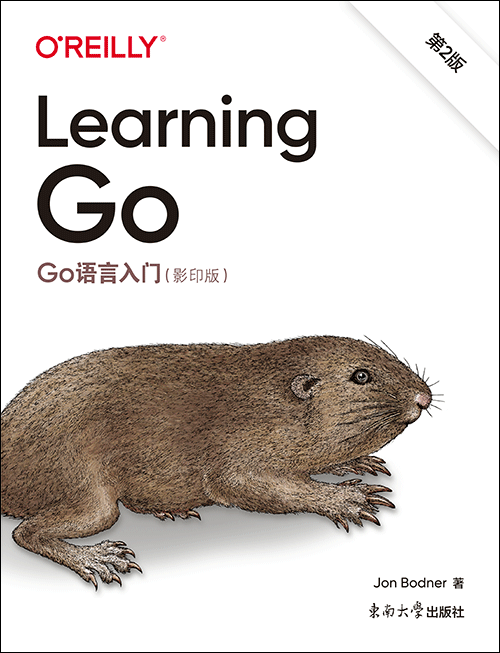
Go语言入门 第2版(影印版)
出版时间:2025年02月
页数:468
“Go是一种独特的语言,即使是经验丰富的程序员也需要‘忘记’一些东西,重新以不同的方式思考软件开发。这本书很好地展示了Go语言的重要特性,同时指出了惯用代码、陷阱以及设计模式。”
——Aaron Schlesinger
微软资深工程师
Go语言已经迅速成为构建Web服务的首选语言。尽管很多教程可以帮助有其他编程语言经验的开发人员学习Go的语法,但它们还是有所欠缺。这些教程没有教授Go的惯用法,导致开发人员经常重造不适合Go环境的模式。这本实用指南提供了编写清晰地道的Go代码所需的关键背景知识。
无论你的经验水平如何,你都将学会像Go开发人员那样思考。作者Jon Bodner介绍了老道的Go开发者采用的设计模式,探讨了这些模式背后的逻辑依据。本次更新版还加入了关于Go工具的新章节。
通过本书,你将学到:
● 编写地道的Go代码,设计Go项目
● 理解Go设计决策背后的缘由
● 设置个人开发者或团队的Go开发环境
● 何时以及如何使用反射、unsafe、cgo
● Go语言的特性如何使语言高效运行
● 哪些特性应当谨慎使用或完全避免使用
● 提高性能,优化内存使用,减少垃圾回收
● 如何使用Go的高级开发工具
——Aaron Schlesinger
微软资深工程师
Go语言已经迅速成为构建Web服务的首选语言。尽管很多教程可以帮助有其他编程语言经验的开发人员学习Go的语法,但它们还是有所欠缺。这些教程没有教授Go的惯用法,导致开发人员经常重造不适合Go环境的模式。这本实用指南提供了编写清晰地道的Go代码所需的关键背景知识。
无论你的经验水平如何,你都将学会像Go开发人员那样思考。作者Jon Bodner介绍了老道的Go开发者采用的设计模式,探讨了这些模式背后的逻辑依据。本次更新版还加入了关于Go工具的新章节。
通过本书,你将学到:
● 编写地道的Go代码,设计Go项目
● 理解Go设计决策背后的缘由
● 设置个人开发者或团队的Go开发环境
● 何时以及如何使用反射、unsafe、cgo
● Go语言的特性如何使语言高效运行
● 哪些特性应当谨慎使用或完全避免使用
● 提高性能,优化内存使用,减少垃圾回收
● 如何使用Go的高级开发工具
- Preface
- 1. Setting Up Your Go Environment
- Installing the Go Tools
- Your First Go Program
- Choose Your Tools
- Makefiles
- The Go Compatibility Promise
- Staying Up-to-Date
- Exercises
- Wrapping Up
- 2. Predeclared Types and Declarations
- The Predeclared Types
- var Versus :=
- Using const
- Typed and Untyped Constants
- Unused Variables
- Naming Variables and Constants
- Exercises
- Wrapping Up
- 3. Composite Types
- Arrays—Too Rigid to Use Directly
- Slices
- Strings and Runes and Bytes
- Maps
- Structs
- Exercises
- Wrapping Up
- 4. Blocks, Shadows, and Control Structures
- Blocks
- Shadowing Variables
- if
- for, Four Ways
- switch
- goto—Yes, goto
- Exercises
- Wrapping Up
- 5. Functions
- Declaring and Calling Functions
- Functions Are Values
- Closures
- defer
- Go Is Call by Value
- Exercises
- Wrapping Up
- 6. Pointers
- A Quick Pointer Primer
- Don’t Fear the Pointers
- Pointers Indicate Mutable Parameters
- Pointers Are a Last Resort
- Pointer Passing Performance
- The Zero Value Versus No Value
- The Difference Between Maps and Slices
- Slices as Buffers
- Reducing the Garbage Collector’s Workload
- Tuning the Garbage Collector
- Exercises
- Wrapping Up
- 7. Types, Methods, and Interfaces
- Types in Go
- Methods
- iota Is for Enumerations—Sometimes
- Use Embedding for Composition
- Embedding Is Not Inheritance
- A Quick Lesson on Interfaces
- Interfaces Are Type-Safe Duck Typing
- Embedding and Interfaces
- Accept Interfaces, Return Structs
- Interfaces and nil
- Interfaces Are Comparable
- The Empty Interface Says Nothing
- Type Assertions and Type Switches
- Use Type Assertions and Type Switches Sparingly
- Function Types Are a Bridge to Interfaces
- Implicit Interfaces Make Dependency Injection Easier
- Wire
- Go Isn’t Particularly Object-Oriented (and That’s Great)
- Exercises
- Wrapping Up
- 8. Generics
- Generics Reduce Repetitive Code and Increase Type Safety
- Introducing Generics in Go
- Generic Functions Abstract Algorithms
- Generics and Interfaces 188
- Use Type Terms to Specify Operators
- Type Inference and Generics
- Type Elements Limit Constants
- Combining Generic Functions with Generic Data Structures
- More on comparable
- Things That Are Left Out
- Idiomatic Go and Generics
- Adding Generics to the Standard Library
- Future Features Unlocked
- Exercises
- Wrapping Up
- 9. Errors
- How to Handle Errors: The Basics
- Use Strings for Simple Errors
- Sentinel Errors
- Errors Are Values
- Wrapping Errors
- Wrapping Multiple Errors
- Is and As
- Wrapping Errors with defer
- panic and recover
- Getting a Stack Trace from an Error
- Exercises
- Wrapping Up
- 10. Modules, Packages, and Imports
- Repositories, Modules, and Packages
- Using go.mod
- Building Packages
- Working with Modules
- Publishing Your Module
- Versioning Your Module
- Module Proxy Servers
- Additional Details
- Exercises
- Wrapping Up
- 11. Go Tooling
- Using go run to Try Out Small Programs
- Adding Third-Party Tools with go install
- Improving Import Formatting with goimports
- Using Code-Quality Scanners
- Using govulncheck to Scan for Vulnerable Dependencies
- Embedding Content into Your Program
- Embedding Hidden Files
- Using go generate
- Working with go generate and Makefiles
- Reading the Build Info Inside a Go Binary
- Building Go Binaries for Other Platforms
- Using Build Tags
- Testing Versions of Go
- Using go help to Learn More About Go Tooling
- Exercises
- Wrapping Up
- 12. Concurrency in Go
- When to Use Concurrency
- Goroutines
- Channels
- select
- Concurrency Practices and Patterns
- When to Use Mutexes Instead of Channels
- Atomics—You Probably Don’t Need These
- Where to Learn More About Concurrency
- Exercises
- Wrapping Up
- 13. The Standard Library
- io and Friends
- time
- encoding/json
- net/http
- Structured Logging
- Exercises
- Wrapping Up
- 14. The Context
- What Is the Context?
- Values
- Cancellation
- Contexts with Deadlines
- Context Cancellation in Your Own Code
- Exercises
- Wrapping Up
- 15. Writing Tests
- Understanding the Basics of Testing
- Running Table Tests
- Running Tests Concurrently
- Checking Your Code Coverage
- Fuzzing
- Using Benchmarks
- Using Stubs in Go
- Using httptest
- Using Integration Tests and Build Tags
- Finding Concurrency Problems with the Data Race Detector
- Exercises
- Wrapping Up
- 16. Here Be Dragons: Reflect, Unsafe, and Cgo
- Reflection Lets You Work with Types at Runtime
- unsafe Is Unsafe
- Cgo Is for Integration, Not Performance
- Exercises
- Wrapping Up
- Index
书名:Go语言入门 第2版(影印版)
作者:Jon Bodner 著
国内出版社:东南大学出版社
出版时间:2025年02月
页数:468
书号:978-7-5766-1764-1
原版书书名:Learning Go, 2nd Edition
原版书出版商:O'Reilly Media
The animal on the cover of Learning Go is a plains pocket gopher (Geomys bursarius), a burrowing mammal found across the Great Plains of North America. These rodents are highly adapted to digging and live primarily underground.
Plains pocket gophers are covered in brown fur and have a nearly naked tail. Physical adaptations to digging include small eyes, short ears, and large, clawed front feet. They also have a tolerance for low oxygen and high carbon dioxide levels. The gophers are named for their external cheek pouches, which can be used for carrying food.
The gophers are territorial and aggressive, and will rarely enter another’s burrow.
They spend nearly three-quarters of their time in their own burrows, which contain their nests and food caches of roots and grasses. They go above ground to search for food and mates.
The plains pocket gopher’s conservation status is of least concern.
Plains pocket gophers are covered in brown fur and have a nearly naked tail. Physical adaptations to digging include small eyes, short ears, and large, clawed front feet. They also have a tolerance for low oxygen and high carbon dioxide levels. The gophers are named for their external cheek pouches, which can be used for carrying food.
The gophers are territorial and aggressive, and will rarely enter another’s burrow.
They spend nearly three-quarters of their time in their own burrows, which contain their nests and food caches of roots and grasses. They go above ground to search for food and mates.
The plains pocket gopher’s conservation status is of least concern.
购买选项
|
© 2026,奥莱利技术咨询(北京)有限公司。版权所有。 传真: +86-10-88097463 京ICP备05003502号 |
|