
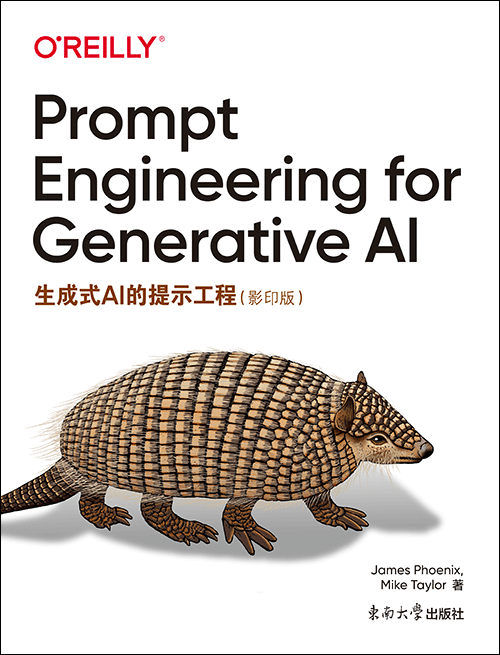
生成式AI的提示工程(影印版)
出版时间:2025年02月
页数:401
“这是我读过的关于提示工程的最佳书籍。Mike和James都是该领域的行家里手。”
——Dan Shipper
Every联合创始人兼CEO
“如果你想提高AI系统的准确性和可靠性,你的书架上绝对不能少了这本书。”
——Mayo Oshin
Siennai Analytics创始人兼CEO,LangChain早期贡献者
ChatGPT和DALL-E这样的大语言模型(LLM)和扩散模型拥有前所未有的潜力。通过使用互联网上的公共文本和图像进行训练,这些模型能够为各种任务提供帮助。而且,随着准入门槛的显著降低,几乎任何开发人员都可以利用AI模型来解决以前不适合自动化的问题。
借助本书,你将在生成式人工智能方面打下坚实的基础,学会如何在实践中应用这些模型。在将大语言模型和扩散模型集成到工作流中时,大多数开发人员很难获得可用于自动化系统的可靠结果。作者James Phoenix和Mike Taylor展示了如何通过提示工程原则在生产过程中有效使用AI。
本书讲解了:
● 可跨模型使用且具有前瞻性的五大提示原则
● 使用LangChain等库和框架将生成式AI应用于现实案例
● 对GPT-4和DALL-E 2等OpenAI模型与包括开源模型在内的其他替代方案进行评估,比较它们的优缺点
● 这些原则在NLP、文本和图像生成以及代码领域的实际应用
——Dan Shipper
Every联合创始人兼CEO
“如果你想提高AI系统的准确性和可靠性,你的书架上绝对不能少了这本书。”
——Mayo Oshin
Siennai Analytics创始人兼CEO,LangChain早期贡献者
ChatGPT和DALL-E这样的大语言模型(LLM)和扩散模型拥有前所未有的潜力。通过使用互联网上的公共文本和图像进行训练,这些模型能够为各种任务提供帮助。而且,随着准入门槛的显著降低,几乎任何开发人员都可以利用AI模型来解决以前不适合自动化的问题。
借助本书,你将在生成式人工智能方面打下坚实的基础,学会如何在实践中应用这些模型。在将大语言模型和扩散模型集成到工作流中时,大多数开发人员很难获得可用于自动化系统的可靠结果。作者James Phoenix和Mike Taylor展示了如何通过提示工程原则在生产过程中有效使用AI。
本书讲解了:
● 可跨模型使用且具有前瞻性的五大提示原则
● 使用LangChain等库和框架将生成式AI应用于现实案例
● 对GPT-4和DALL-E 2等OpenAI模型与包括开源模型在内的其他替代方案进行评估,比较它们的优缺点
● 这些原则在NLP、文本和图像生成以及代码领域的实际应用
- Preface
- 1. The Five Principles of Prompting
- Overview of the Five Principles of Prompting
- 1. Give Direction
- 2. Specify Format
- 3. Provide Examples
- 4. Evaluate Quality
- 5. Divide Labor
- Summary
- 2. Introduction to Large Language Models for Text Generation
- What Are Text Generation Models?
- Historical Underpinnings: The Rise of Transformer Architectures
- OpenAI’s Generative Pretrained Transformers
- GPT-4
- Google’s Gemini
- Meta’s Llama and Open Source
- Leveraging Quantization and LoRA
- Mistral
- Anthropic: Claude
- GPT-4V(ision)
- Model Comparison
- Summary
- 3. Standard Practices for Text Generation with ChatGPT
- Generating Lists
- Hierarchical List Generation
- When to Avoid Using Regular Expressions
- Generating JSON
- Filtering YAML Payloads
- Handling Invalid Payloads in YAML
- Diverse Format Generation with ChatGPT
- Explain It like I’m Five
- Universal Translation Through LLMs
- Ask for Context
- Text Style Unbundling
- Identifying the Desired Textual Features
- Generating New Content with the Extracted Features
- Extracting Specific Textual Features with LLMs
- Summarization
- Summarizing Given Context Window Limitations
- Chunking Text
- Chunking Strategies
- Sentence Detection Using SpaCy
- Building a Simple Chunking Algorithm in Python
- Sliding Window Chunking
- Text Chunking Packages
- Text Chunking with Tiktoken
- Encodings
- Estimating Token Usage for Chat API Calls
- Sentiment Analysis
- Least to Most
- Role Prompting
- Benefits of Role Prompting
- Challenges of Role Prompting
- When to Use Role Prompting
- GPT Prompting Tactics
- Classification with LLMs
- Building a Classification Model
- Majority Vote for Classification
- Criteria Evaluation
- Meta Prompting
- Summary
- 4. Advanced Techniques for Text Generation with LangChain
- Introduction to LangChain
- Chat Models
- Streaming Chat Models
- Creating Multiple LLM Generations
- LangChain Prompt Templates
- LangChain Expression Language (LCEL)
- Using PromptTemplate with Chat Models
- Output Parsers
- LangChain Evals
- OpenAI Function Calling
- Parallel Function Calling
- Function Calling in LangChain
- Extracting Data with LangChain
- Query Planning
- Creating Few-Shot Prompt Templates
- Limitations with Few-Shot Examples
- Saving and Loading LLM Prompts
- Data Connection
- Document Loaders
- Text Splitters
- Text Splitting by Length and Token Size
- Text Splitting with Recursive Character Splitting
- Task Decomposition
- Prompt Chaining
- Summary
- 5. Vector Databases with FAISS and Pinecone
- Retrieval Augmented Generation (RAG)
- Introducing Embeddings
- Document Loading
- Memory Retrieval with FAISS
- RAG with LangChain
- Hosted Vector Databases with Pinecone
- Self-Querying
- Alternative Retrieval Mechanisms
- Summary
- 6. Autonomous Agents with Memory and Tools
- Chain-of-Thought
- Agents
- Using LLMs as an API (OpenAI Functions)
- Comparing OpenAI Functions and ReAct
- Agent Toolkits
- Customizing Standard Agents
- Custom Agents in LCEL
- Understanding and Using Memory
- Memory in LangChain
- Other Popular Memory Types in LangChain
- OpenAI Functions Agent with Memory
- Advanced Agent Frameworks
- Callbacks
- Summary
- 7. Introduction to Diffusion Models for Image Generation
- OpenAI DALL-E
- Midjourney
- Stable Diffusion
- Google Gemini
- Text to Video
- Model Comparison
- Summary
- 8. Standard Practices for Image Generation with Midjourney
- Format Modifiers
- Art Style Modifiers
- Reverse Engineering Prompts
- Quality Boosters
- Negative Prompts
- Weighted Terms
- Prompting with an Image
- Inpainting
- Outpainting
- Consistent Characters
- Prompt Rewriting
- Meme Unbundling
- Meme Mapping
- Prompt Analysis
- Summary
- 9. Advanced Techniques for Image Generation with Stable Diffusion
- Running Stable Diffusion
- AUTOMATIC1111 Web User Interface
- Img2Img
- Upscaling Images
- Interrogate CLIP
- SD Inpainting and Outpainting
- ControlNet
- Segment Anything Model (SAM)
- DreamBooth Fine-Tuning
- Stable Diffusion XL Refiner
- Summary
- 10. Building AI-Powered Applications
- AI Blog Writing
- Topic Research
- Expert Interview
- Generate Outline
- Text Generation
- Writing Style
- Title Optimization
- AI Blog Images
- User Interface
- Summary
- Index
书名:生成式AI的提示工程(影印版)
作者:James Phoenix, Mike Taylor 著
国内出版社:东南大学出版社
出版时间:2025年02月
页数:401
书号:978-7-5766-1763-4
原版书书名:Prompt Engineering for Generative AI
原版书出版商:O'Reilly Media
The animal on the cover of Prompt Engineering for Generative AI is a screaming hairy armadillo (Chaetophractus vellerosus). This species of armadillo gets it name due to its habit of squealing, or screaming, when it is handled or threatened.
The screaming hairy armadillo resides in arid areas, specifically in regions in Argentina, Bolivia, and Paraguay. This animal prefers subtropical or tropical regions such as dry forests, scrubland, grassland, and deserts. White and light brown hair cover the animal’s limbs and belly. A caparace, a thick armor made of keratin, covers the animal’s body, a shield covers its head, and a small band exists between its ears. The animal typically reaches 12 to 22 inches in length, including its tail, and weighs less than 2 pounds, with male armadillos generally being larger than females.
The screaming hairy armadillo is an omnivore, eating small vertebrates such as frogs, toads, lizards, birds, and rodents, as well as fruits and vegetation. It can go long periods of time without drinking water.
Although the IUCN Red List designates the screaming hairy armadillo as Least Concern, it is heavily hunted in parts of Bolivia for its meat and carapace.
The screaming hairy armadillo resides in arid areas, specifically in regions in Argentina, Bolivia, and Paraguay. This animal prefers subtropical or tropical regions such as dry forests, scrubland, grassland, and deserts. White and light brown hair cover the animal’s limbs and belly. A caparace, a thick armor made of keratin, covers the animal’s body, a shield covers its head, and a small band exists between its ears. The animal typically reaches 12 to 22 inches in length, including its tail, and weighs less than 2 pounds, with male armadillos generally being larger than females.
The screaming hairy armadillo is an omnivore, eating small vertebrates such as frogs, toads, lizards, birds, and rodents, as well as fruits and vegetation. It can go long periods of time without drinking water.
Although the IUCN Red List designates the screaming hairy armadillo as Least Concern, it is heavily hunted in parts of Bolivia for its meat and carapace.
购买选项
|
© 2026,奥莱利技术咨询(北京)有限公司。版权所有。 传真: +86-10-88097463 京ICP备05003502号 |
|